Emergency Response · Staten Island
NYC DCWP HIC #1220350-DCA Family-Owned Since 1997
NYC HIC #1220350-DCA · Family-Owned on Staten Island Since 1997

Bathroom remodeling on Staten Island. Written estimate, real timeline, NYC code compliance, one licensed contractor from design through final inspection.

Anajur Construction Corp. is a NYC DCWP Licensed Home Improvement Contractor (#1220350-DCA), family-owned on Staten Island since 1997. We remodel bathrooms in all 13 Staten Island ZIP codes. A standard full bathroom gut renovation runs $22,000 to $45,000 in 2025-2026, with most homeowners landing in the $28,000 to $38,000 mid-grade band. Every project includes a written line-item estimate, NYC DOB permits filed and inspected, ANSI A118.10 waterproofing, ASSE 1016 anti-scald shower valves, and a workmanship warranty in writing. No today-only pricing. No verbal scope. No subcontractor shuffle.
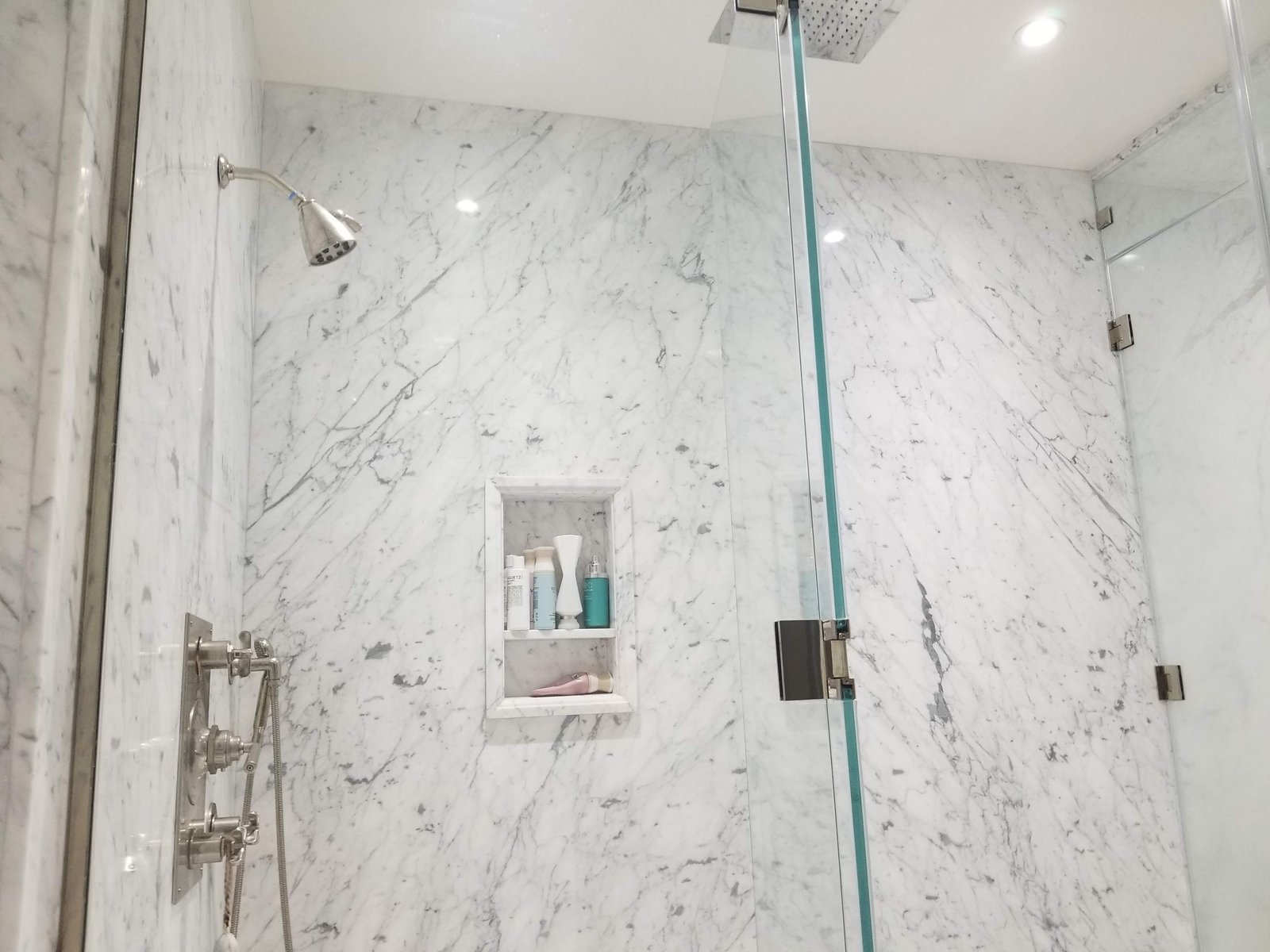
Anajur Carrara marble shower on Staten Island: frameless glass, custom marble niche, dual shower system.
Carrara marble shower with custom niche and frameless glass, Staten Island bathroom remodel by Anajur, NYC DCWP HIC #1220350-DCA.
NYC DCWP HIC LICENSE
#1220350-DCA
Verifiable at NYC Consumer & Worker Protection · Active since 1997
By Jouri, founder of Anajur Construction Corp. · NYC DCWP HIC #1220350-DCA · Family-owned on Staten Island since 1997 · Last updated June 10, 2026 · Kitchen Remodeling · Reconstruction & Repairs · Water Damage Restoration · Basement Flooding
28
Years
On Staten Island Since 1997
13
ZIP Codes
All of Staten Island
1
Contractor
Design Through Inspection
10%
Max Deposit
Reasonable Down Payment
01 / Scope

What "bathroom remodel" or renovation actually means on Staten Island.

"Remodel" and "renovation" get used interchangeably in marketing, but the scope behind them matters more than the label. On Staten Island in 2026, three project types dominate. Knowing which one fits your bathroom is the first decision that affects everything else: cost, timeline, permits, and what kind of contractor you need.

A.

Cosmetic Refresh (no permit needed)

Like-for-like replacement of vanity, toilet, faucets, tile, and paint in the same footprint. No moved plumbing, no moved walls, no new electrical circuits. Qualifies as "ordinary repair" under NYC Admin Code §28-105.4.1 and does not require a NYC DOB permit. Typical scope: 1 to 2 weeks active work, $8,000 to $20,000.

Refresh
1-2 weeks
B.

Standard Remodel (Alt-2 + LAA filing)

New layout within the same room footprint. Vanity moved, shower expanded or relocated, electrical circuits added for new lighting or heated floors, plumbing rerouted. Requires Alteration Type 2 (ALT) filing with NYC Department of Buildings prepared by a Registered Architect or Professional Engineer, plus a separate Limited Alteration Application (LAA) filed by a Licensed Master Plumber. Typical scope: 4 to 6 weeks active work, $22,000 to $45,000.

Standard
4-6 weeks
C.

Gut Renovation (walls out, structural touch)

Footprint expansion, wall removal, new framing, full subfloor replacement when rot is found behind the tub. Combined Alt-2 with structural engineer review, plus electrical and plumbing LAAs. Common on pre-1980 Staten Island homes (about two-thirds of housing stock) where galvanized supply lines, cast-iron stacks, and rotted joists are exposed during demolition. Typical scope: 6 to 8 weeks active work, $35,000 to $75,000+.

Gut
6-8 weeks
02 / Cost

What it actually costs to remodel a bathroom on Staten Island in 2026.

Most bathroom contractor websites refuse to publish numbers. The ones that do publish vague single-tier ranges. Here are real 2025-2026 cost ranges for the Staten Island market, with the line items behind them. Per the 2025 Cost vs. Value Report by Zonda and JLC, a national midrange bath remodel job cost averaged $26,138 with an 80.0 percent cost recouped at resale (the highest reading since 2007); Staten Island typically runs 10 to 20 percent below Manhattan but 15 percent above national because of NYC's labor premium documented at 129.1 on the Gordian Construction Cost Index.

Scope Low Mid High Active Construction
Powder room / half-bath $5,000 $9,500 $18,000 5-10 days
Standard full bath (5x8 to 5x10) $22,000 $32,000 $45,000 4-6 weeks
Master / primary bath (60-100+ sq ft) $32,000 $48,000 $75,000 6-8 weeks
Walk-in shower conversion only $4,000 $8,500 $15,000 1-2 weeks
Tub-to-shower like-for-like swap $3,500 $6,500 $12,000 3-7 days
Aging-in-place / ADA-compliant $12,000 $22,000 $40,000 4-6 weeks

Within a standard $30,000 mid-range bath, the typical breakdown is: labor 50 to 65 percent (the largest single category; NYC trades carry the labor premium); tile and waterproofing materials 14-18 percent; vanity and cabinetry 10-14 percent; fixtures 12-16 percent; plumbing and electrical labor combined 17-24 percent; demolition 4-6 percent; permits and filing professional 1-3 percent; contractor markup and overhead 12-20 percent. Always carry a 15 to 20 percent contingency on top of the contract price, per the 2026 U.S. Houzz and Home Study of 20,358 homeowners, 37 percent exceeded their budget in 2025, most commonly due to mid-project material upgrades or hidden conditions discovered after demolition.

03 / Hidden Conditions

What we find behind the walls of older Staten Island bathrooms.

Roughly two-thirds of Staten Island's housing stock was built before 1980. The median home was built around 1973. That means most bathrooms we open up have one or more of the conditions below, and they are the single most common reason a $25,000 quote becomes a $38,000 final invoice when an inexperienced contractor handles them. We price them honestly in the contingency line at signing instead of as a surprise mid-project change order.

Galvanized supply lines (1920s–1960s homes)

Common in pre-war homes across St. George, Stapleton, Port Richmond, Mariners Harbor, and West Brighton. Galvanized pipe corrodes from the inside, restricts flow, and contaminates water with rust. NYC Plumbing Code requires copper, brass, or other listed metal for potable water distribution; PEX, CPVC, and PVC are not permitted in NYC for potable supply per NYC Plumbing Code Table 605.4. Replacement runs $2,000 to $6,000 for a single bathroom's branch lines.

Cast-iron drain stacks (pre-1970 homes)

Cast iron is heavy, expensive to cut, and prone to cracking at the hub joints. Replacement runs $375 to $900 per linear foot installed (Angi 2026 NYC data), or $3,000 to $10,000+ for a full stack replacement. We assess the stack with a sewer-scope camera before contract signing where conditions warrant.

Knob-and-tube electrical (pre-1950 homes)

Pre-1950 homes across the North Shore still carry knob-and-tube wiring. Bathroom GFCI receptacles (NEC 210.8(A)(1)) and a dedicated 20-amp branch circuit (NEC 210.11(C)(3)) are not compatible with K&T. Bathroom-only rewire runs $240 to $3,710; full house K&T removal runs $12,000 to $36,000.

Asbestos floor tile and pipe insulation (pre-1980 homes)

NYC DOB will not approve an Alt-2 permit without a filed ACP-5 from a NYC DEP-certified investigator confirming no asbestos-containing material is disturbed by the work scope. Survey cost $500 to $2,500. If results come back positive, NYC DEP requires an ACP-7 filing and licensed abatement by a NYS DOL-certified contractor. We price that phase into the schedule up front so it never ambushes the budget mid-demolition.

Subfloor rot and joist damage (any age)

Almost universal under tubs and toilets where small leaks went undetected for years. Repair runs $900 to $3,000 for sistering joists and replacing plywood. Per Andrea Schumacher of Andrea Schumacher Interiors, "Eighty percent of the time you are going to open up the walls and run into something you didn't know you had to contend with." That is why our estimates carry a contingency line.

Out-of-code ventilation (pre-1990 homes)

Many older Staten Island bathrooms vent into the attic rather than to outdoors, violating NYC Mechanical Code §501. Code minimum for a private bathroom is 50 cfm intermittent or 20 cfm continuous per NYC MC Table 403.3.1.1, ducted directly to outdoors at minimum 3 ft from property lines and 10 ft from operable openings. Fan plus proper duct routing plus exterior cap runs $400 to $950 installed.

04 / NYC Code

NYC code compliance: what your bathroom contractor should know cold.

These are the codes and standards that govern every legal bathroom remodel in NYC. If your contractor cannot recite them, your project is at risk. The filings go in through the right hands: the design professional of record prepares the Alt-2, the licensed master plumber and electrician file their own applications and pull their own permits, and Anajur coordinates the schedule, sequences the trades, and stands at every inspection with you.

2022 NYC Plumbing Code

Local Law 14 of 2020

Effective November 7, 2022. Section §405.3.1 sets fixture clearances: 15 inches from a water closet centerline to any side wall, 30 inches center-to-center between adjacent fixtures, 21 inches clear in front. Section §424.3 requires ASSE 1016 anti-scald valves on every shower, limit-stopped at 120°F.

2025 NYC Electrical Code

Local Law 128 of 2024

Effective December 21, 2025 (2020 NEC + NYC amendments). Bathroom receptacles require GFCI protection per NEC 210.8(A)(1). A dedicated 20-amp branch circuit is required per NEC 210.11(C)(3). NM cable (Romex) is restricted in NYC multifamily; MC cable or EMT conduit is the compliant default.

NYC PC Table 605.4

Permitted Water Supply Materials

NYC permits copper (Type L or K), brass, or ductile iron for potable water distribution. PEX, CPVC, and PVC are NOT on the permitted list, a common reason out-of-state contractors fail NYC inspections. PEX is allowed only for hydronic floor heating per NYC Mechanical Code §1203.11.

ANSI A118.10 / TCNA B421-B422

Shower Waterproofing

Bonded waterproof membrane behind every wet area tile installation, installed per ANSI A108.13. We default to Schluter Kerdi sheet membrane or Laticrete Hydro Ban liquid membrane as complete kits. Mixing manufacturer systems voids warranties, the single most common waterproofing failure mode in NYC bathrooms.

NYC MC Table 403.3.1.1

Mechanical Exhaust

50 cfm intermittent or 20 cfm continuous for a private residential bathroom. Discharge directly to outdoors per §501. Minimum 3 feet from property lines, 10 feet from operable openings. Multiple dwellings additionally require 4 air changes per hour per NYC HMC §27-759.

NYC Admin Code §28-408

Licensed Master Plumber Required

All plumbing work in NYC must be performed under the direct and continuing supervision of a Licensed Master Plumber. No homeowner exemption. The LMP must personally sign and seal all DOB filings. There is no legal way to remodel a bathroom in NYC without an LMP's involvement.

05 / Who We Work With

Bathroom remodeling: full renovations, aging-in-place, insurance rebuilds.

A. Homeowners
B. Aging in Place
C. Insurance

Full Bathroom Renovations

Homeowners renovating to live in: master baths, guest baths, powder rooms. Most of our work, ages 35 to 65, families across all 13 Staten Island ZIP codes. We work around your household, contain dust, schedule water shutoffs around your needs, and coordinate so the rest of the house stays functional. Per the 2024 U.S. Houzz Bathroom Trends Study, 27 percent of homeowners remove the primary-bath tub entirely during a renovation, and 79 to 82 percent of that group enlarges the shower instead, a pattern we see clearly in Staten Island as well.

Aging-in-Place & Accessibility

Per New York State Comptroller Report 22-2025 (January 2025), Staten Island's 65+ population is 17.8 percent, third-highest of any NYC borough. We design and build curbless showers (TCNA B421C / B422C with depressed slab), grab-bar blocking engineered to develop 250 lb at any point per ADA §609.8, comfort-height toilets (17-19 inches), slip-resistant flooring (TCNA wet-area floor methods), lower thresholds (2 inches max), lever-handle faucets, and wider doorways (36 inches). Per the 2025 Cost vs. Value Report, Universal Design bathrooms recouped 64.1 percent in the Middle Atlantic region (up from 49.4 percent nationally in 2024), among the largest year-over-year ROI swings in the report.

Insurance Claim Bathroom Rebuilds

Bathrooms are the most common source of homeowner water damage claims. When a supply line, drain pipe, upstairs leak, or sewage backup destroys the bathroom and surrounding areas, Anajur handles both mitigation and rebuild under one NYC DCWP HIC license. We document the loss with photos and moisture readings, provide Xactimate-compatible estimates the adjuster understands, file supplemental scope when hidden damage surfaces during demolition, and do direct billing on most major carriers. If a job tests positive for mold, that is a separate IICRC S520 specialist scope. Anajur does not perform mold remediation; we coordinate the homeowner with a remediation specialist for that phase before our rebuild work begins. One of the few Staten Island contractors with the combined GC license and restoration experience to handle this scope under one roof.

06 / Hidden Damage

When a remodel is actually a rebuild.

Sign 1
Persistent moisture, mold, or musty smell.
A persistent damp smell that returns after cleaning is a sign of moisture behind the wall, not in front of it. Mold on tile grout that returns within weeks of bleaching means active water intrusion behind the membrane (if one was installed). Once substrate is involved, the scope crosses from cosmetic into structural reconstruction territory.
Sign 2
Tile cracks, lifting, or hollow-sounding spots.
Crack patterns radiating from drains, hollow sounds when tapping a floor tile, or grout that crumbles to dust all indicate substrate failure underneath. Per ANSI A108.5 §3.3.6, wet area tile requires minimum 95 percent mortar coverage. Failed coverage from age or moisture often means the substrate beneath is also compromised.
Sign 3
Soft floor, sagging ceiling below, water stains.
A soft spot under the tub or toilet, a water-stained ceiling in the room below, or warped baseboards anywhere along the wet wall: these mean a leak has been ongoing long enough to rot the subfloor or joists. Insurance may cover the rebuild if the loss is sudden and accidental rather than long-term maintenance neglect; document everything with photos before calling.
Sign 4
Failed shower pan or drain leak.
A failed shower pan often does not present obvious water above; it presents as a ceiling stain or wet drywall in the room below. The TCNA Method TR420 covers shower pan repair with new bonded waterproof membrane, but if joists are involved the scope crosses to structural rebuild requiring engineer review.

Anajur handles insurance claim bathroom rebuilds under our NYC DCWP HIC license, including water damage mitigation, Xactimate-compatible estimates, direct adjuster communication, and supplemental scope filing. We are one of the few Staten Island contractors with the combined GC license and restoration experience to handle this scope under one roof. Learn about our water damage restoration services.

07 / Process

How a bathroom remodel actually gets done: week by week.

A "one-day install" only describes the swap of a tub or shower unit. A real bathroom remodel takes weeks. Here is the actual sequence we follow, with the inspection windows and material cure times that drive the schedule.

A.

Design & Materials (Pre-Construction)

In-home consultation. Layout planning. Material selection (tile brand and grade, vanity model and finish, fixtures, shower system, flooring). Permit determination. Architect Alt-2 drawings prepared when required. Materials ordered. Lead times typically 2 to 4 weeks for stock items, 5 to 8 weeks for custom orders. Per Refugio's Staten Island guide, custom items "can take anywhere from 5 to 8 weeks to receive."

Phase 1
3-8 weeks
B.

Permits Filed & Approved

Standard Alt-2 examination at NYC DOB takes 4 to 8 weeks. Directive 14 self-certification by a Registered Architect cuts review to 1 to 2 weeks (DOB audits approximately 30 percent of D14 filings per Milrose Consultants). Plumbing LAA filed by Licensed Master Plumber, 2 to 4 weeks. We file in our name and post the permit at the worksite.

Phase 2
1-8 weeks
C.

Demolition

Vanity and fixture removal, tile tear-out, drywall removal where studs need exposure, subfloor inspection. Dust containment with poly barriers and floor protection through the work area. Asbestos and lead remediation if previously identified. Hidden conditions documented for change order discussion before proceeding.

Phase 3
1-2 days
D.

Rough Plumbing & Electrical

Plumbing reroutes for vanity relocation or shower expansion in Type L copper supply lines per NYC Plumbing Code Table 605.4. Electrical updates for new lighting, exhaust fan upgrades, GFCI compliance, heated floor wiring per NEC 210.8 and 210.11. Inspections scheduled and passed before walls close.

Phase 4
3-5 days
E.

Waterproofing & Vapor Barrier

The critical phase most contractors compromise on. Bonded waterproof membrane per ANSI A118.10 across the entire shower enclosure plus 12 inches beyond curbless entries. Schluter Kerdi or Laticrete Hydro Ban as the default systems, installed as complete kits from a single manufacturer. 24-hour flood test witnessed and photo-documented before any tile goes up.

Phase 5
2-3 days
F.

Tile, Drywall & Flooring

Cement board install for wet areas (cement board is dimensionally stable when wet but is NOT a moisture barrier; the membrane behind it is). Drywall hang and finish for dry walls. Tile setting per ANSI A108.5 with minimum 95 percent mortar coverage in wet areas. Grout, seal, transition strips. Floor lippage tolerance per ANSI A108.01: 1/32 inch maximum for tiles under 15 inches, 1/16 inch maximum for large-format tile.

Phase 6
5-8 days
G.

Vanity, Fixtures & Finish

Vanity installation, faucet and trim install (ASSE 1016 anti-scald valves limit-stopped at 120°F per NYC PC §424.3), toilet set with new wax seal, shower door install, mirror, lighting, exhaust fan vented to outdoors per NYC MC §501, paint, hardware. Final plumbing connection. Final electrical inspection. Custom shower glass templated only after tile is fully set and cured.

Phase 7
3-5 days
H.

Final Inspection & Punch-List

NYC DOB final inspection passed. Walkthrough with you item by item. Punch-list addressed within 3-7 days. Lien releases, marked-up plans, copies of inspection reports, fixture operating manuals, and the warranty documentation handed over. Project files closed when you sign off.

Phase 8
3-7 days
08 / Design Direction 2026

What Staten Island homeowners are actually choosing in 2026.

From the 2026 NKBA Bath Trends Report (released November 11, 2025, surveyed nearly 700 industry professionals) and the 2025 U.S. Houzz Bathroom Trends Study (1,737 homeowners). These are the patterns we are building into projects right now.

Warm whites and earth tones

NKBA 2026: off-white 58%, light brown/tan 54%, white 40% dominate. Gray walls dropped from 38% in 2017 to 20% in 2023 per Houzz. Pantone announced Cloud Dancer as the 2026 Color of the Year, a true neutral white with balanced warm and cool undertones.

Wood vanities passed white

Houzz 2024 Trends Study: wood 26% / white 22% / gray 13% / blue 8%, a reversal from a decade of white dominance. Mid-tone white oak and walnut dominate. Floating vanities remain the urban/condo default.

Wet rooms in 1 in 6 renovations

Houzz 2025: 16% of renovated bathrooms feature a wet room (up 3 points YoY). Zillow's 2024 listings analysis found wet-room mentions up 19% in for-sale listings. Common in compact NYC layouts because removing the tub-shower curb visually doubles the perceived bathroom size.

Low-curb showers default; curbless rising

Houzz 2025: low-curb 44-45%, alcove 42%, curbless 20%. 52% of homeowners adding accessibility prioritize a low-curb shower; 28% specifically install a curbless shower with continuous slope to drain per TCNA B421C / B422C.

Matte black sliding from default to accent

Multiple 2026 design analyses flag matte black as oversaturated; designers describe it as moving from front-of-mind to accent. Brushed and champagne brass are the current warm metal default. Mixed metals are mainstream design-forward.

Smart toilets and bidet seats mainstreaming

Houzz 2024: 41% of renovated toilets have specialty features; 23% have bidet seats. NKBA 2026: 51% of industry pros expect rising smart toilet adoption over the next 3 years. North American bidet seat segment growing at ~12% CAGR.

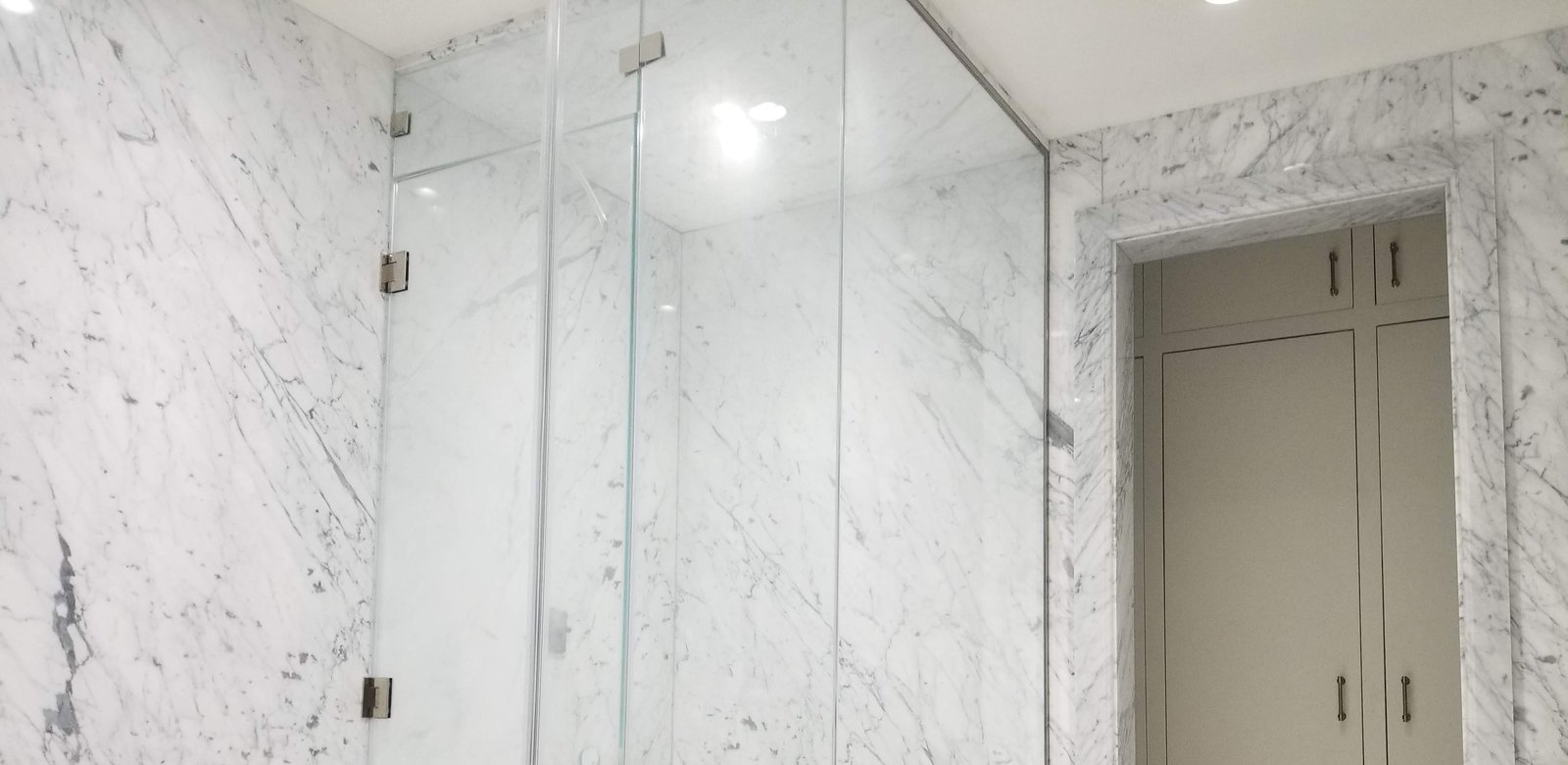
Anajur Staten Island bathroom: Carrara marble walls, frameless glass enclosure, marble-clad doorway.
Warm-white Carrara, frameless glass, integrated marble joinery, Staten Island bathroom completed by Anajur.
09 / Service Area

All 13 Staten Island ZIP codes. No bridges. No out-of-borough delays.

Anajur Construction Corp. is based at 93 Commodore Drive in Charleston (10309). Every bathroom remodel we do is dispatched from Staten Island for Staten Island. Per US Census ACS 2019-2023 data, Staten Island has 178,991 housing units across 13 ZIP codes; the median home was built around 1973, meaning roughly two-thirds of bathrooms are 45+ years old and candidates for renovation. We know which neighborhoods carry which housing stock characteristics and price accordingly: pre-war Victorians in St. George have different scope than 1980s split-levels in Tottenville.

10301
St. George · New Brighton · Silver Lake
10302
Port Richmond · Elm Park
10303
Mariners Harbor · Arlington
10304
Stapleton · Todt Hill · Clifton
10305
South Beach · Dongan Hills · Arrochar
10306
New Dorp · Midland Beach · Oakwood
10307
Tottenville · Charleston
10308
Great Kills
10309
Huguenot · Annadale · Prince's Bay
10310
West Brighton · Castleton Corners
10311
Bloomfield · Travis
10312
Eltingville · Annadale · Arden Heights
10314
New Springville · Bulls Head · Willowbrook
10 / Why Anajur

Six things that matter when choosing a Staten Island bathroom contractor.

License
NYC DCWP HIC #1220350-DCA, verifiable.
Active and verifiable at the NYC Department of Consumer and Worker Protection. Verify any contractor's license at a866-dcwpbp.nyc.gov before signing. The Home Improvement Contractor license is what legally covers multi-trade work in NYC; "licensed and insured" without a number is not enough.
Permit History
Verifiable NYC DOB filing record.
Every Anajur project is filed with the NYC Department of Buildings under the contractor's name. Look up our permit history at NYC DOB BIS. Most competitors filing under cash or unpermitted work cannot show a permit history. We can.
Family Continuity
Same family. Same phone. Since 1997.
Family-owned and continuously operated by Jouri since 1997: 28 years on Staten Island. Franchises change hands. Our license has not. If your warranty needs honoring in 2032, we will still be the same family, same Staten Island address.
Waterproofing
The step most contractors skip.
Bonded waterproof membrane per ANSI A118.10 across every shower enclosure, plus 24-hour witnessed flood test before tile. Schluter Kerdi or Laticrete Hydro Ban installed as complete manufacturer kits. The reason bathrooms we build in 2026 will still be dry in 2051.
Estimates
Written line-item scope. No verbal quotes.
Every estimate includes scope of work line by line, materials specification down to fixture model and finish, labor breakdown by phase, projected timeline, permit fees, and the contingency line. No hidden fees. No change orders without your written approval. Reasonable deposit: never more than 10 percent of contract price at signing.
Insurance Claims
GC + restoration under one license.
Bathroom water damage is the most common homeowner insurance claim category. Anajur handles both mitigation and rebuild under one NYC DCWP HIC license: Xactimate-compatible estimates, direct adjuster communication, supplemental scope filing, direct billing on most carriers. Mold remediation, if testing requires it, happens through a qualified specialist before our rebuild phase begins. One of the few Staten Island contractors with this combined capability.
11 / Blog

Deeper reading on bathroom water damage and rebuild claims.

Long-form articles on the documentation, standards, and insurance workflow behind water-damaged bathroom rebuilds, written from the contractor's side of the file.

12 / Questions

What Staten Island homeowners actually ask before remodeling a bathroom.

Fifteen questions covering cost, timeline, permits, codes, ROI, insurance, warranty, and process. If your contractor cannot answer these directly, find a contractor who can.

A standard full bathroom gut renovation runs $22,000 to $45,000 in 2025-2026, mid-grade band $28,000 to $38,000. Powder room or half-bath updates: $5,000 to $18,000. Master bath: $32,000 to $75,000. Per the 2025 Cost vs. Value Report, national midrange averaged $26,138 with 80.0% cost recouped at resale (2025 Cost vs. Value Report).

4 to 8 weeks of active construction plus 3 to 8 weeks of pre-construction (design, permits, materials). Simple cosmetic refresh: 10-14 days. Full gut renovation with moved plumbing, expanded footprint, custom tile, walk-in shower: 6-8 weeks. Per the 2026 U.S. Houzz and Home Study (n=20,358), 37% of homeowners exceeded their budget in 2025, often due to mid-project material upgrades or hidden conditions. We provide a written timeline with every estimate showing each phase with inspection windows and cure times.

Yes for most bathroom remodels. The 2022 NYC Plumbing Code requires any work touching plumbing, electrical, or framing to be filed with NYC DOB. Like-for-like fixture replacement in the same footprint qualifies as ordinary repair under NYC Admin Code §28-105.4.1 and does not require a permit. Anything else requires Alt-2 filing by a Registered Architect or PE, plus separate LAA filed by a Licensed Master Plumber. Working without a permit carries civil penalties of the greater of 6x the permit fee or $600, capped at $10,000, for 1- and 2-family homes per §28-213.1.1, plus stop-work orders and resale title issues.

The terms are used interchangeably by most contractors and homeowners. Technically, a remodel changes layout or function (moving fixtures, adding a shower, expanding footprint), while a renovation updates surfaces and fixtures in the same layout. We use both terms because customers search for both. The scope of work in the contract is what actually matters, not the label.

Labor is the single largest expense: typically 50-65% of total cost on Staten Island. Skilled trades carry the NYC labor premium documented at 129.1 on the Gordian Construction Cost Index (national baseline 100). Within materials, the highest line items are vanity and cabinetry (10-14% of total), tile and waterproofing (14-18%), and fixtures (12-16%). The single biggest unbudgeted cost driver is hidden damage discovered after demolition: asbestos floor tile in pre-1980 homes ($2,500-$8,000 for abatement), cast-iron drain replacement ($375-$900 per linear foot), and knob-and-tube electrical rewire.

Per the 2025 Cost vs. Value Report by Zonda/JLC, a national midrange bathroom remodel recouped 80.0% of cost at resale in 2025 (the report’s strongest showing since 2007, up from 73.7% in 2024). For the Middle Atlantic region (NY/NJ/PA): midrange 79.9% on a $30,158 job cost. Universal Design bathrooms (aging-in-place features) jumped from 49.4% in 2024 to 61.2% in 2025 nationally, and to 64.1% in the Middle Atlantic. A new bathroom addition recouped 53%, up 18 points year over year. Bathrooms are now the second-highest interior ROI behind only a minor kitchen remodel.

Insurance does NOT cover a discretionary remodel. Insurance DOES cover the rebuild of a bathroom destroyed by a covered loss: burst supply line, hidden leak, sewage backup, upstairs water event. Anajur handles insurance claim bathroom rebuilds directly: photo and moisture documentation, Xactimate-compatible estimates, supplemental scope filing when hidden damage surfaces during demolition, direct billing on most major carriers. Note: unpermitted prior bathroom work is the most common reason carriers deny water damage claims as "faulty workmanship." Always pull permits.

Yes for any multi-bathroom home. We isolate the work area with dust barriers, schedule water shutoffs around your needs, and coordinate plumbing reconnections so the rest of the house stays functional. If you have only one bathroom, we sequence the work to minimize days without a functioning shower or toilet: typically 3-5 days at most for a single-bathroom home, and we can recommend portable shower trailer rental for $1,500-$3,000 per month.

Anajur uses ANSI A118.10 compliant bonded waterproof membranes installed per ANSI A108.13 and TCNA methods B421 or B422. Default systems: Schluter Kerdi sheet membrane and Laticrete Hydro Ban liquid membrane, both A118.10 listed and warrantied as complete kits. The most common failure mode: skipping the membrane behind cement board (cement board is dimensionally stable when wet but is NOT a moisture barrier), or mixing incompatible systems from different manufacturers. We always specify a single manufacturer's complete kit for membrane, drain, corners, and seam treatment, and we perform a 24-hour witnessed flood test before tile.

Anajur structures payments around progress milestones: a reasonable deposit at contract signing (we do not ask for more than 10% of contract price up front), progress payments at each completed phase (demolition, rough plumbing/electrical, waterproofing, tile/fixtures), and final payment after punch-list and final inspection sign-off. We provide a written payment schedule with the contract. We do not bait-and-switch on financing terms. Any change orders require your written approval before work begins.

Anajur provides a written workmanship warranty on every bathroom remodel that documents what is covered, for how long, and how to make a warranty claim. Manufacturer warranties on fixtures, tile, waterproofing membranes, and other materials pass through with full registration documentation. Our license, business, and family ownership have been continuous on Staten Island since 1997, so unlike many franchise remodelers, we are still here to honor the warranty when you need us. The warranty is part of the contract you sign. Review it before signing, ask questions, and we will explain every clause.

Every Anajur estimate includes line-by-line scope of work; materials specification (tile brand and grade, vanity model and finish, fixture model and finish, shower or tub model, flooring type, waterproofing system); labor breakdown by phase; projected timeline with milestone dates; permit fees and filing professional fees if applicable; disposal and dumpster fees; insurance coverage confirmation; the NYC DCWP HIC #1220350-DCA license reference; and a 15-20% contingency line item for hidden conditions. No hidden fees. No verbal-only line items. No change orders without written approval.

All 13 Staten Island ZIP codes: 10301 (St. George, New Brighton), 10302 (Port Richmond), 10303 (Mariners Harbor), 10304 (Stapleton, Todt Hill), 10305 (South Beach, Dongan Hills), 10306 (New Dorp, Midland Beach), 10307 (Tottenville), 10308 (Great Kills), 10309 (Charleston, Rossville, Huguenot), 10310 (West Brighton), 10311 (Bloomfield, Travis), 10312 (Annadale, Huguenot), 10314 (Castleton Corners, Bulls Head). All work dispatched from our Charleston base at 93 Commodore Drive. No bridge crossings, no out-of-borough delays.

NYC Plumbing Code Table 605.4 does not list PEX, CPVC, or PVC as permitted materials for potable water distribution. Distribution piping in NYC residential bathrooms must be copper (Type L or K), brass, or other listed metals. PEX is permitted only for hydronic heating per NYC Mechanical Code §1203.11 (radiant floor warming). This is one of the most common reasons unlicensed and out-of-state contractors fail NYC plumbing inspections: they install PEX as in any other state, and the work must be ripped out and re-piped in copper at homeowner expense before sign-off. Anajur uses Type L copper as standard.

Per NYC Plumbing Code §424.3, every individual shower and tub-shower valve we install conforms to ASSE 1016 / ASME A112.1016 / CSA B125.16 and is limit-stopped at 120°F at the valve discharge. The limit-stop is a field setting that must be checked seasonally because supply water temperatures fluctuate. In-line thermostatic mixing valves at the water heater alone (ASSE 1017) are NOT a substitute for the §424.3 valve at the shower itself. We install only listed pressure-balanced or thermostatic valves from manufacturers carrying the ASSE 1016 certification mark.

Ready to start planning your bathroom?

Call Anajur · Staten Island (917) 969-1378